Getting Xilinx ISE working

fpga logipi linux xilinx nablopomo

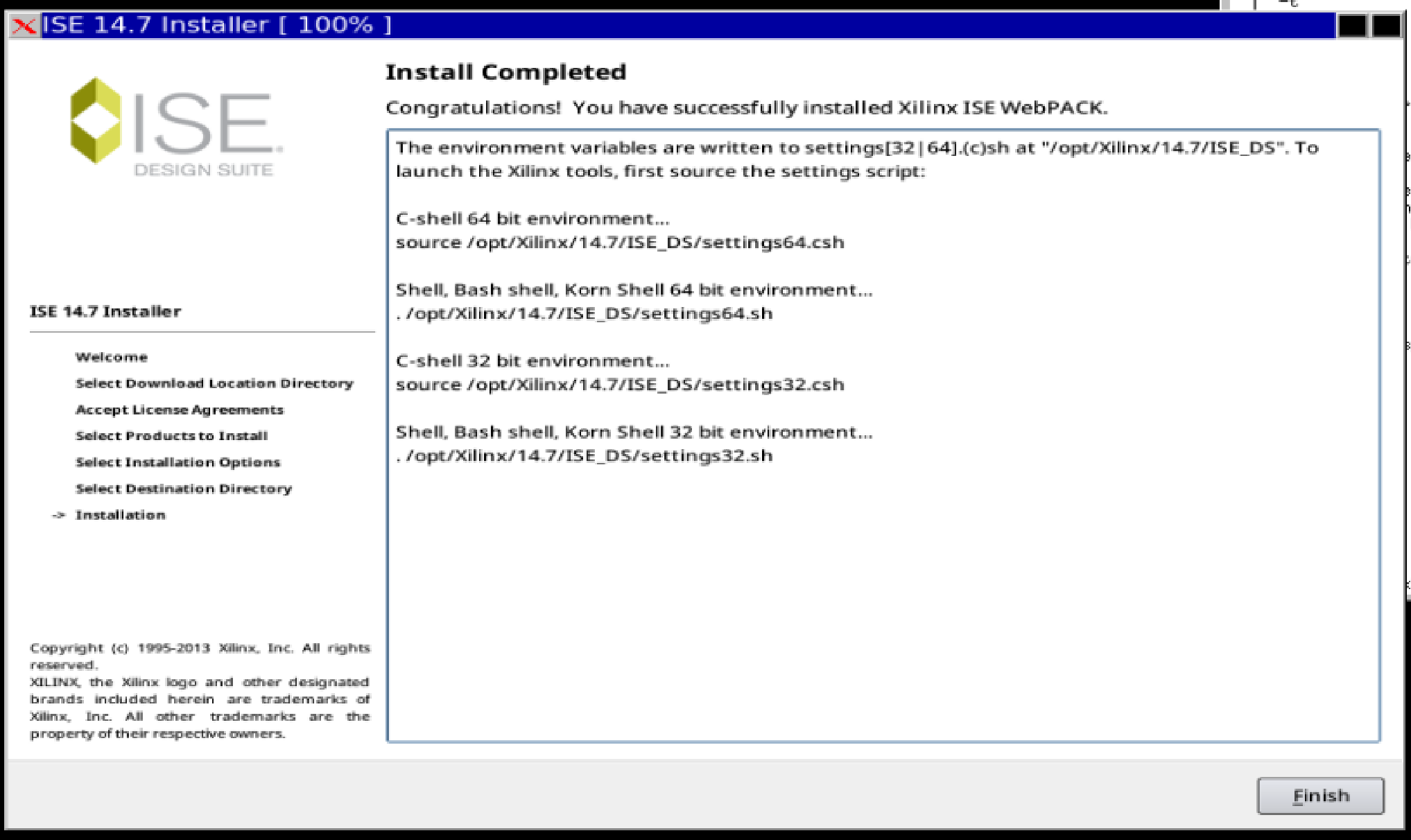
Screen shot of Xilinx ISE showing its "installation complete" notification

Now that I've arranged for there to be enough disk space to do so, it's time to install the Xilinx ISE tools that are needed to compile my own bitstreams for the Logi-Pi.

This is quite a chonky download (4 files of approximately 2GB each), so let's set that going first. The files come from the Xilinx legacy download page - you need to create an account to download things, but doing so isn't too onerous (and doesn't seem to have caused a lot of spam to be sent my way). The files I downloaded were

Installing "old" software on a new Linux (I'm using AlmaLinux 10 here) can be challenging; fortunately I'm not the first to tread this path, and there are some install instructions that relate to installing the tools on modern Ubuntu - this was useful to get me on the right track (and confirm that this wasn't just a futile endeavour from the start!).

Once the downloads are done, it's time to start the install proper. The first step is to unpack the first file, which is a tar archive:

mkdir ~/xilinx
cd ~/xilinx
tar -xvf ~/Downloads/Xilinx_ISE_DS_14.7_1015_1-1.tar 

As pointed out by the install instructions I mentioned above, some extra packages are needed. The names are slightly different on RedHat/Rocky Linux/Alma Linux systems, so we tweak the installation command to be:

dnf install ncurses-compat-libs ncurses-devel xorg-x11-fonts-75dpi  xorg-x11-fonts-100dpi motif-devel

We also need to make sure our user has permissions to install the toolchain where it likes to live:

sudo mkdir -p /opt/Xilinx
sudo chown -R "$USER" /opt/Xilinx

Now it's time to run the installer. This requires an X display. Alma 10 defaults to Wayland, which unfortunately won't do. I'm sure it's not hard to install an X server locally, but I cheated and just connected (over ssh) from a system that had one already working, and started the installer:

ssh -Y myvm
cd ~/xilinx
./xsetup

That ran the installer, which (after quite a while, including prompting for the location of the other big files) completed!

But we're not yet all the way there: the software is installed, sure, but if we want to be able to actually run it, we'll need a licence. This is free, and can be obtained from the Xilinx licensing page - again, this needs an account; I chose the "ISE WebPACK License", and fairly shortly it a licence was emailed to me.

Once it arrived, it took a while to figure out how to get the tools to recognise it: it turns out the trick is to save it as /opt/Xilinx/14.7/ISE_DS/ISE/data/Xilinx.lic.

Before running tools, it's necessary to run source /opt/Xilinx/14.7/ISE_DS/settings64.sh (or source /opt/Xilinx/14.7/ISE_DS/settings64.csh for die-hard csh users); this sets up all the relevant paths and other environment variables. Having done this, I can now run an Amaranth script that attempts to build a bitstream - and it succeeds!

Next step is to try writing some code of my own and compiling that. But that might require setting up a "platform" in Amaranth, to teach it about the Logi-Pi.

Rubik's cube, illuminated

python making electronics nablopomo ledpanel cube

One face of a Rubik's cube, drawn by a script. All the six different colours are visible.

For some reason, many years ago, I bought a few 32x32 LED panels - a bit like these, only much cheaper (I suspect they were being sold off as end-of-stock or similar).

I've since been thinking up ideas for what to do with them. If you're a close observer of my Mastodon feed you may have noticed one panel being put to effect at Hallowe'en - there was quite a lot of work involved in that, which I may blog about later - and though it was a lot of fun, it only used one of the panels.

But I have three such panels... so what to do with them?

Read more...

FPGA tooling: disk upgrade

fpga logipi linux virtualbox disks nablopomo

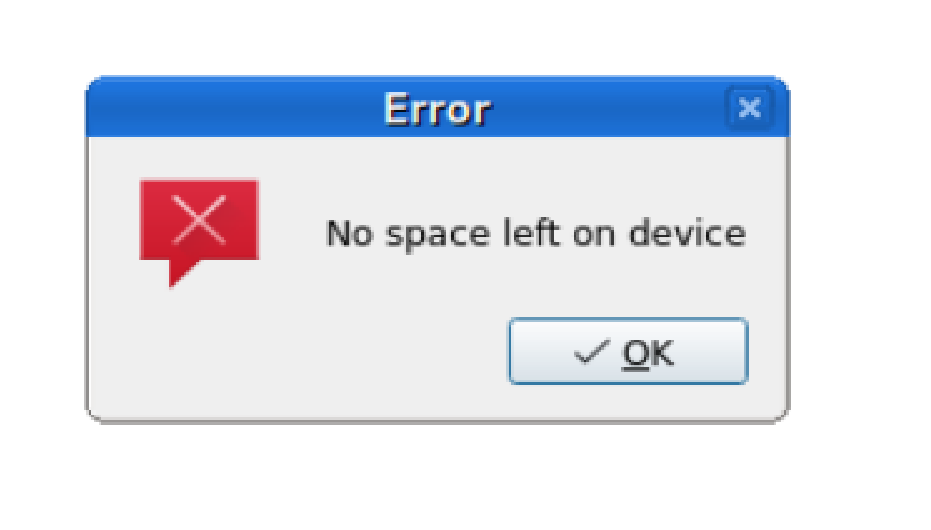
Dialogue box showing "No space left on device"

I've been working on resurrecting the Logi-Pi FPGA board for the Raspberry Pi. I managed to update the tools for it, so that I could load a precompiled bitstream to it from a Raspberry Pi 5 (which wasn't even out when the Logi-Pi first came out) - and the next step is to install the FPGA toolchain, so that I can write my own code for it.

First problem with that: the FPGA toolchain is big, as in lots of gigabytes, and alas the disk of the VM I'm working doesn't have enough space... and the host disk doesn't have enough free space to extend it. Sad times.

Time to purchase a new, bigger NVMe SSD for the laptop (easy - though it was not so easy on the wallet; fortunately I had presciently managed to buy something before the AI bubble pushed prices beyond crazy), and having bought it, shuffle things around to get more space inside the VM.

Read more...

Recycling bin prototype (RIP)

making nablopomo

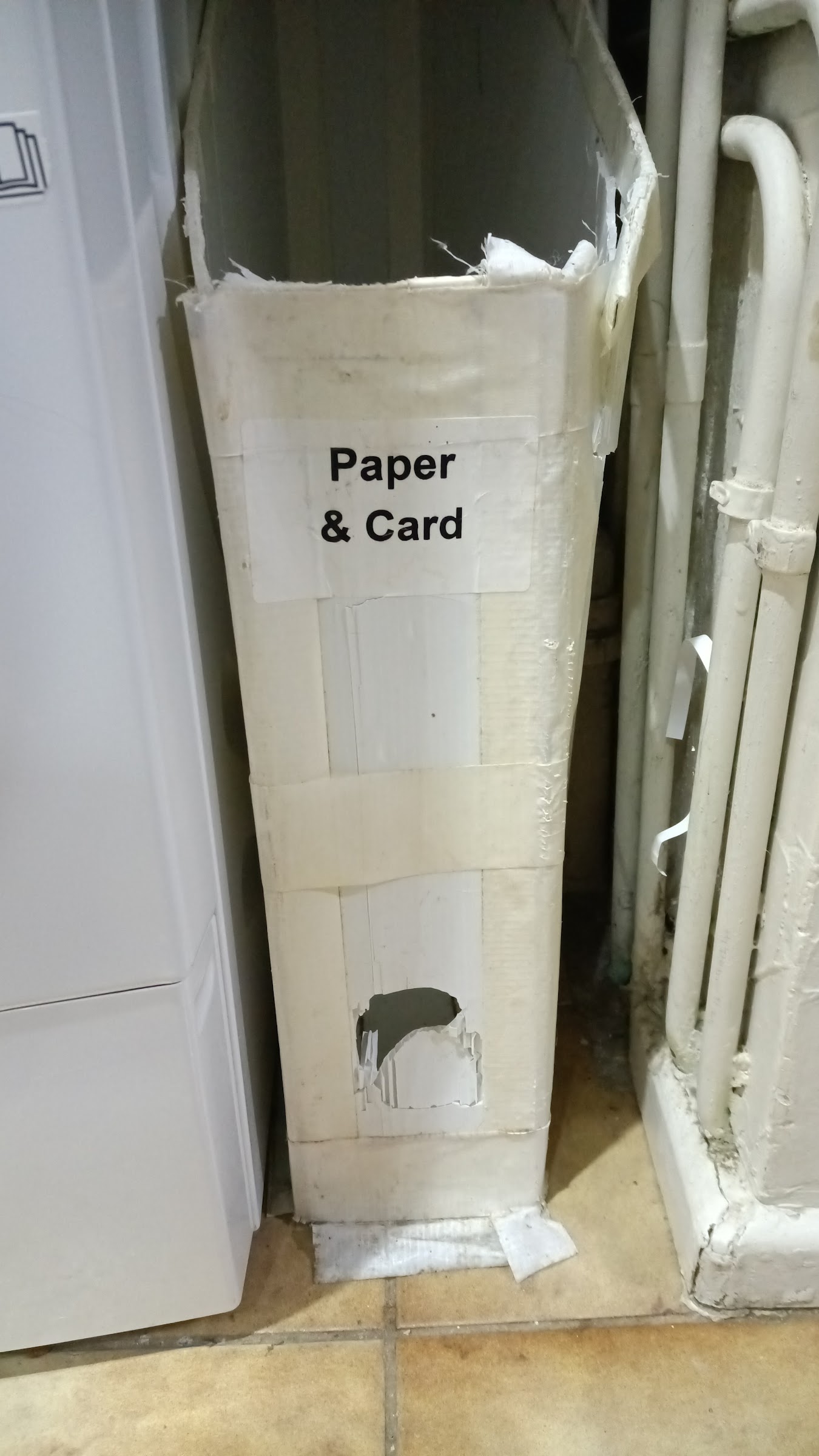
A recycling bin for paper and card, made out of corrugated plastic and duct tape. It looks somewhat the worse for wear, and there is a visible hole.

Back in 2016, having recently moved house and with a new baby, my wife and I realised we needed a way to deal with our recycling. Previously we'd had a neat row of boxes that fitted neatly under a kitchen countertop - one for each category of recycling - but these did not fit well anywhere in the new house, so we were tripping over them in the kitchen.

There were some suitable niches in the new kitchen - beside the washing machine - but searching online quickly showed that nothing entirely suitable was available to order; everything either wouldn't fit, would look terrible, wouldn't hold the relevant materials, wouldn't be easy to simply toss things in, or some combination of all of these. Clearly we needed a custom build.

Read more...

MIDI sound modules

making electronics midi nablopomo

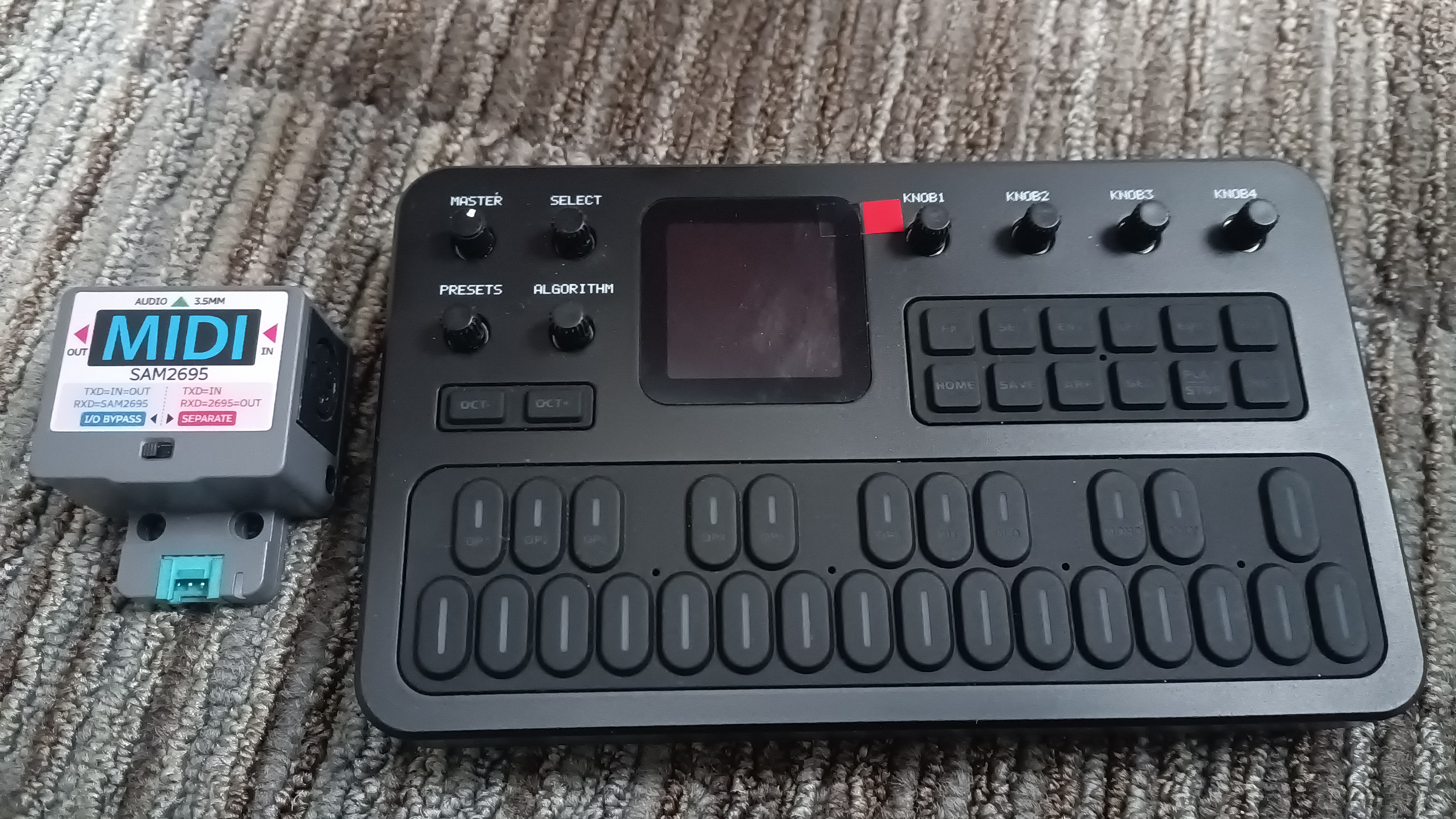
The two MIDI modules mentioned in the post, side by side

I have in mind a few projects that involve creating MIDI controllers - that is, things that send out signals to play music on... all sorts of MIDI instruments capable of playing sounds. Over the years I've picked up a few - even made the odd one - but all of them are rather bulky (not least the digital piano!), so not easy to just pick up and play with. For testing whether a MIDI controller is working, I ideally need something I can just pick up and plug in, and see if it starts making the right sort of noises. Time to go shopping...

Read more...

MIDI PMODs

electronics fpga midi nablopomo

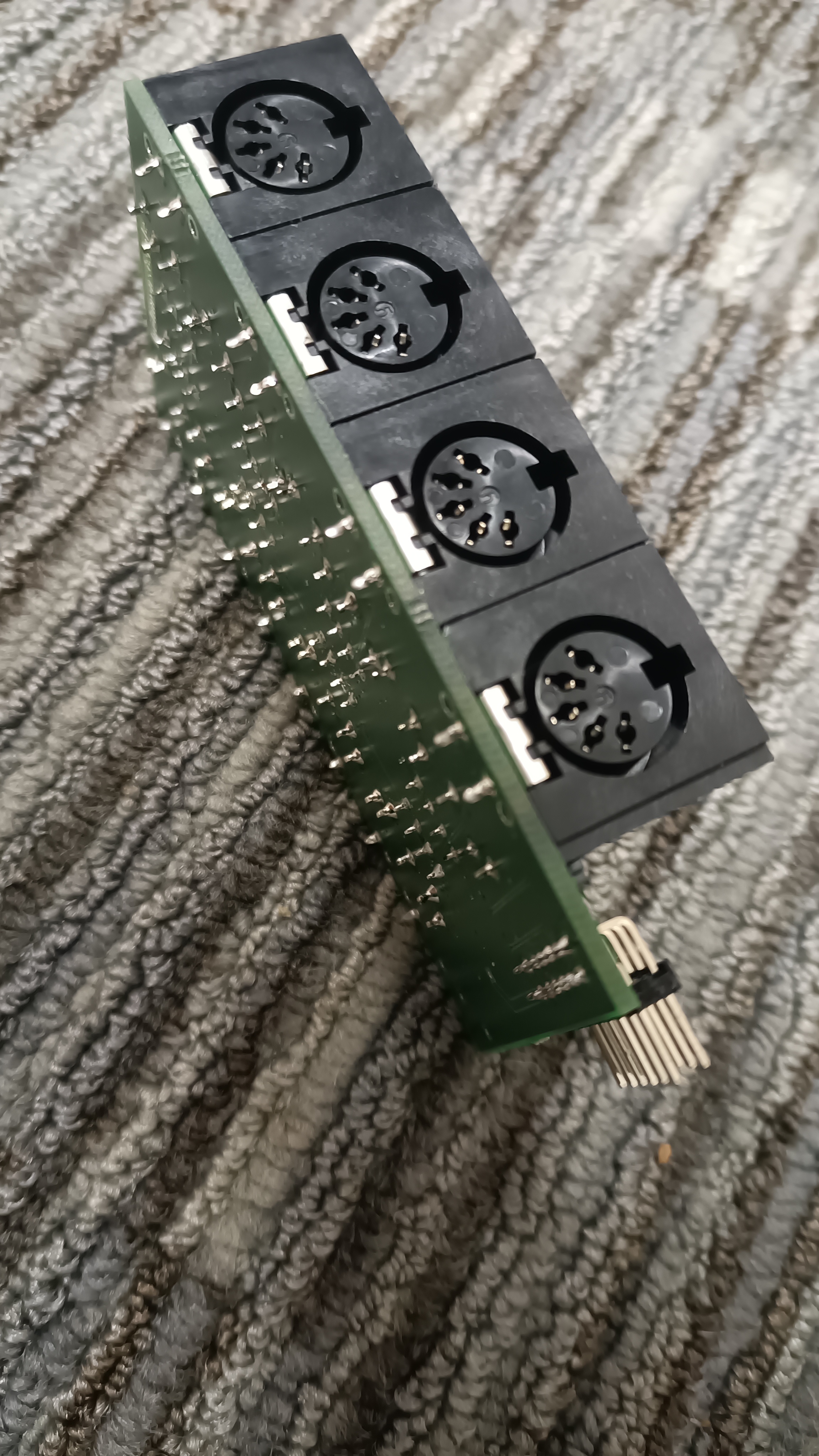
A circuit board with a PMOD plug, 4x MIDI in ports, and 4x MIDI out ports

For a while I've had in the back of my mind a few MIDI projects, that I've been putting off - in part because doing MIDI well involves very precise control of timing, and that can be tricky (or at least, not much fun) to pull off in software.

But working with FPGAs changes everything!

Read more...

Powering a Pi by PoE

raspberrypi nablopomo poe

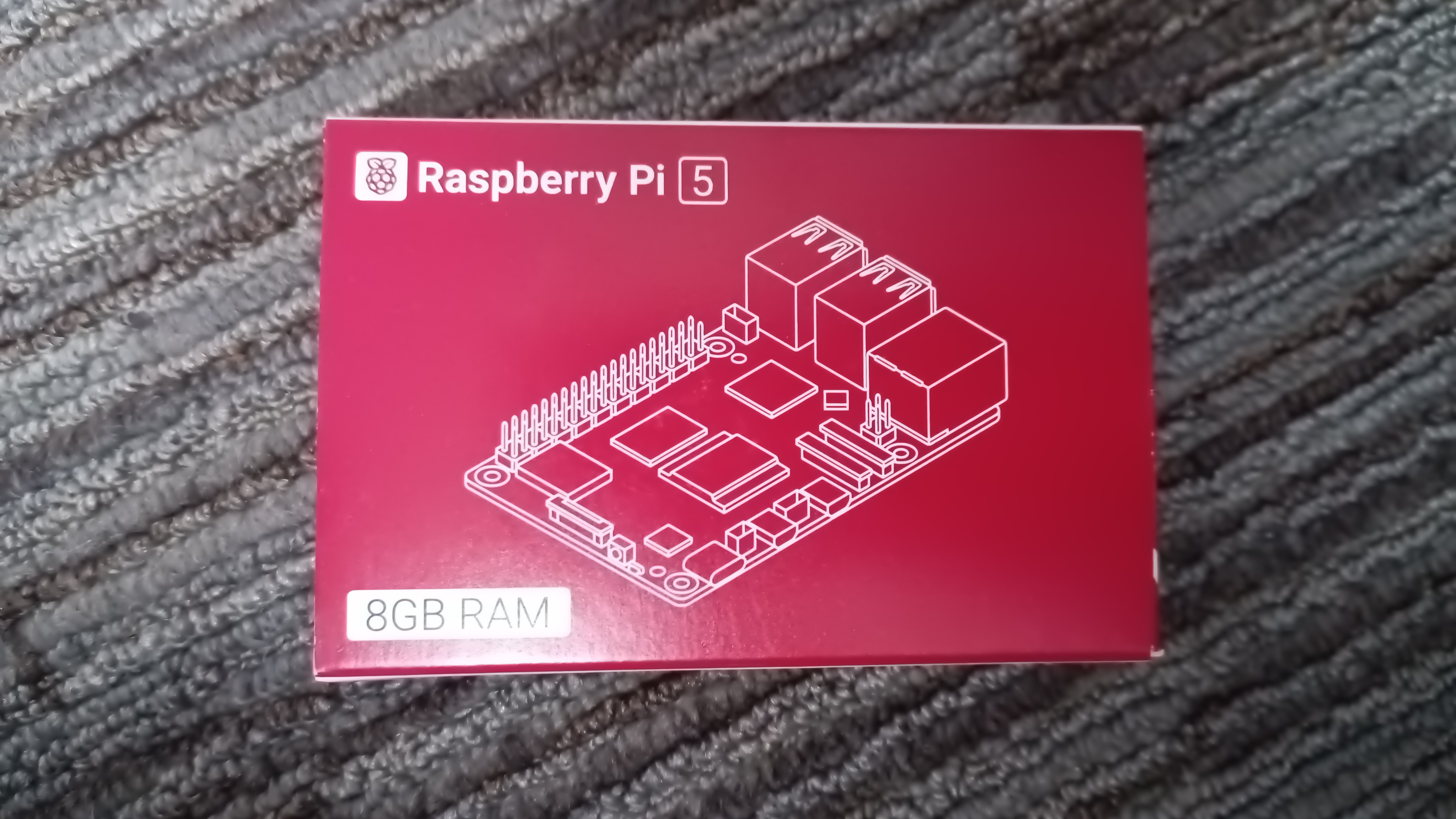
A boxed Raspberry Pi 5

The Raspberry Pi is a very useful device: small enough to go in various corners where a "real" computer wouldn't fit, and efficient enough in terms of power consumption that you can leave it on without breaking the bank, and even power them with Power over Ethernet (PoE), meaning only one cable is needed for both power and network, keeping everything that little bit tidier.

Just plug in a network cable and it all "just works"? Sadly it's not quite that simple.

Read more...

An unwelcome visitor

electronics nablopomo

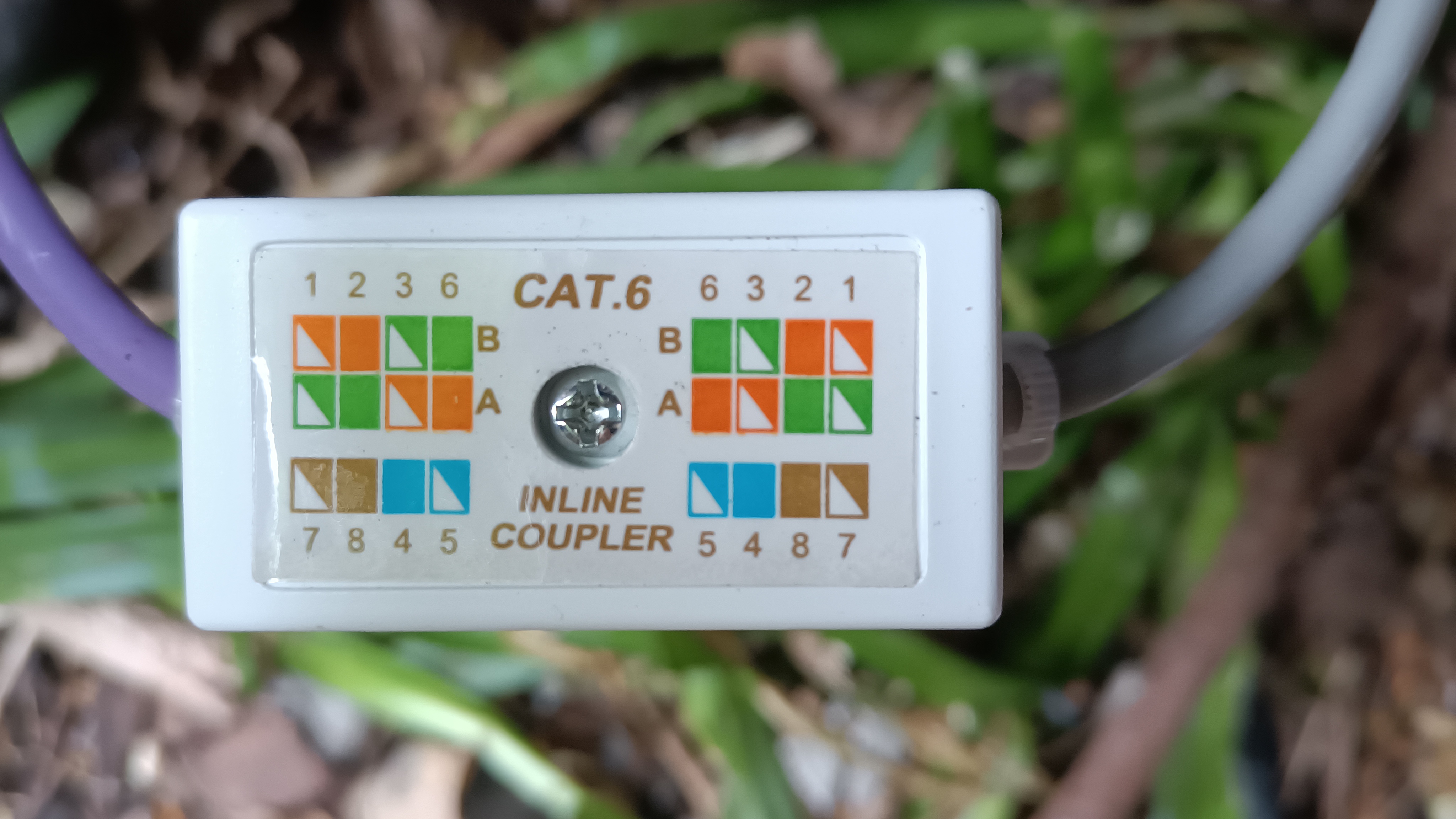
A Cat5 cable coupler, with the cover on

The other night, as I was putting the children to bed, the doorbell rang. And again - and again, and again, and again.

Wondering what emergency could necessitate this frantic bell-pushing, I rushed down the stairs and flung open the front door to see... nothing. But the doorbell continued to ring.

I pressed the bell-push myself, to see if it was stuck; at this point the ringing stopped, so I shrugged, assumed it must have just got stuck somehow, and went back upstairs to tend to the children.

Later the same evening, the bell sounded again - but this time it stopped almost immediately, and since I could see from the window there was nobody outside, I turned my attention to other things.

When I did eventually figure out the cause, it was not what I expected!

Read more...

NaBloPoMo

nablopomo

Duckworth, a yellow duck who is the logo for this blog.

Prompted by Terence Eden's post on Mastodon about NaBloPoMo - (inter)national blog post month - I'm going to try to make one blog post per day in November. I'm not sure how far I'll get, but I've at least got a few drafts almost ready to go, so it may not be a complete washout.

If there are any topics you'd like to hear about, please comment. Not least because this will give me some confidence that the comment system on this blog actually works...