Rubik's cube: slide the side, take 2

python maths making cube electronics nablopomo ledpanel
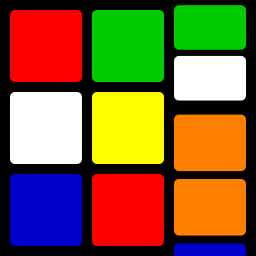
A still frame of the animation: the right-hand edge of the cube is part way being rotated towards the user. The coloured squares that are rotating into view are smaller vertically, because of the angle at which they are to the user.

I previously posted about a prototype animation I'd done for a potential large, illuminated Rubik's cube project.

That animation moved the side as if there were a ribbon wrapped all around the cube (well, that slide of it), with the colours painted on it: as the ribbon slides round the cube, the "old" colours disappear and the "new" ones appear, but they all stay the same size. Can we make it more realistic?

Read more...

Welcome to Glasgow

python electronics amaranth nablopomo glasgow

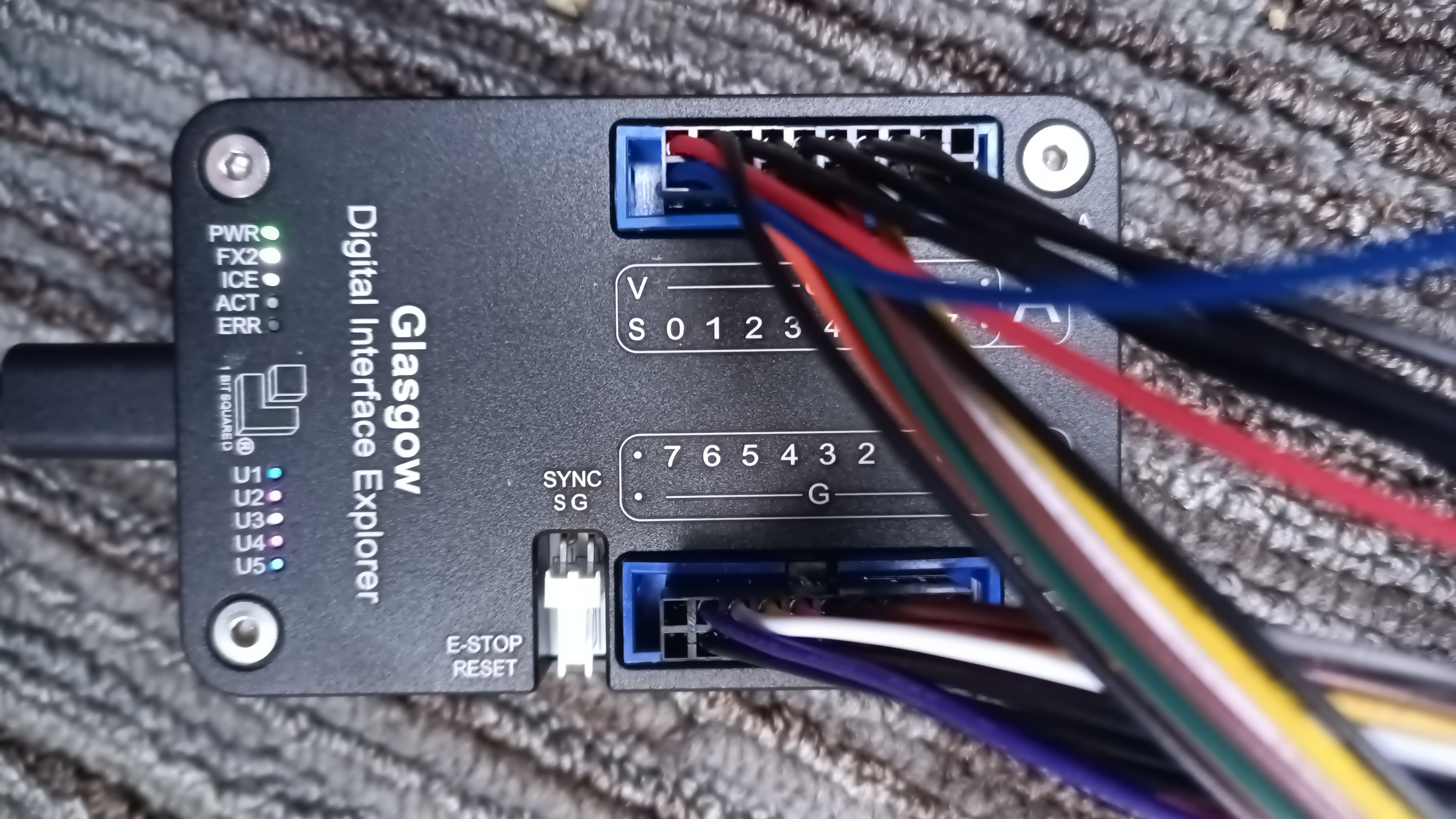
A Glasgow Interface Explorer, with lots of wires coming out of it

Not long ago, this little device arrived on my doorstep: a Glasgow Interface Explorer. Well, that is, the actual circuit board arrived - the case had actually come months ago, so it was nice to be able to fill it.

But what actually is it?

Read more...

Rubik's cube: slide the side

python making electronics nablopomo ledpanel cube

One face of a Rubik's cube, drawn by a script. All the six different colours are visible. The right-hand slice is rotated 90 degrees downwards, and then back again, repeatedly.

I recently posted about a potential project making a large, illuminated Rubik's cube. I'd created an animation of the face nearest the viewer being rotated. But, for completeness, we also need to be able to rotate other faces...

Read more...

Rubik's cube, illuminated

python making electronics nablopomo ledpanel cube

One face of a Rubik's cube, drawn by a script. All the six different colours are visible.

For some reason, many years ago, I bought a few 32x32 LED panels - a bit like these, only much cheaper (I suspect they were being sold off as end-of-stock or similar).

I've since been thinking up ideas for what to do with them. If you're a close observer of my Mastodon feed you may have noticed one panel being put to effect at Hallowe'en - there was quite a lot of work involved in that, which I may blog about later - and though it was a lot of fun, it only used one of the panels.

But I have three such panels... so what to do with them?

Read more...

MIDI sound modules

making electronics midi nablopomo

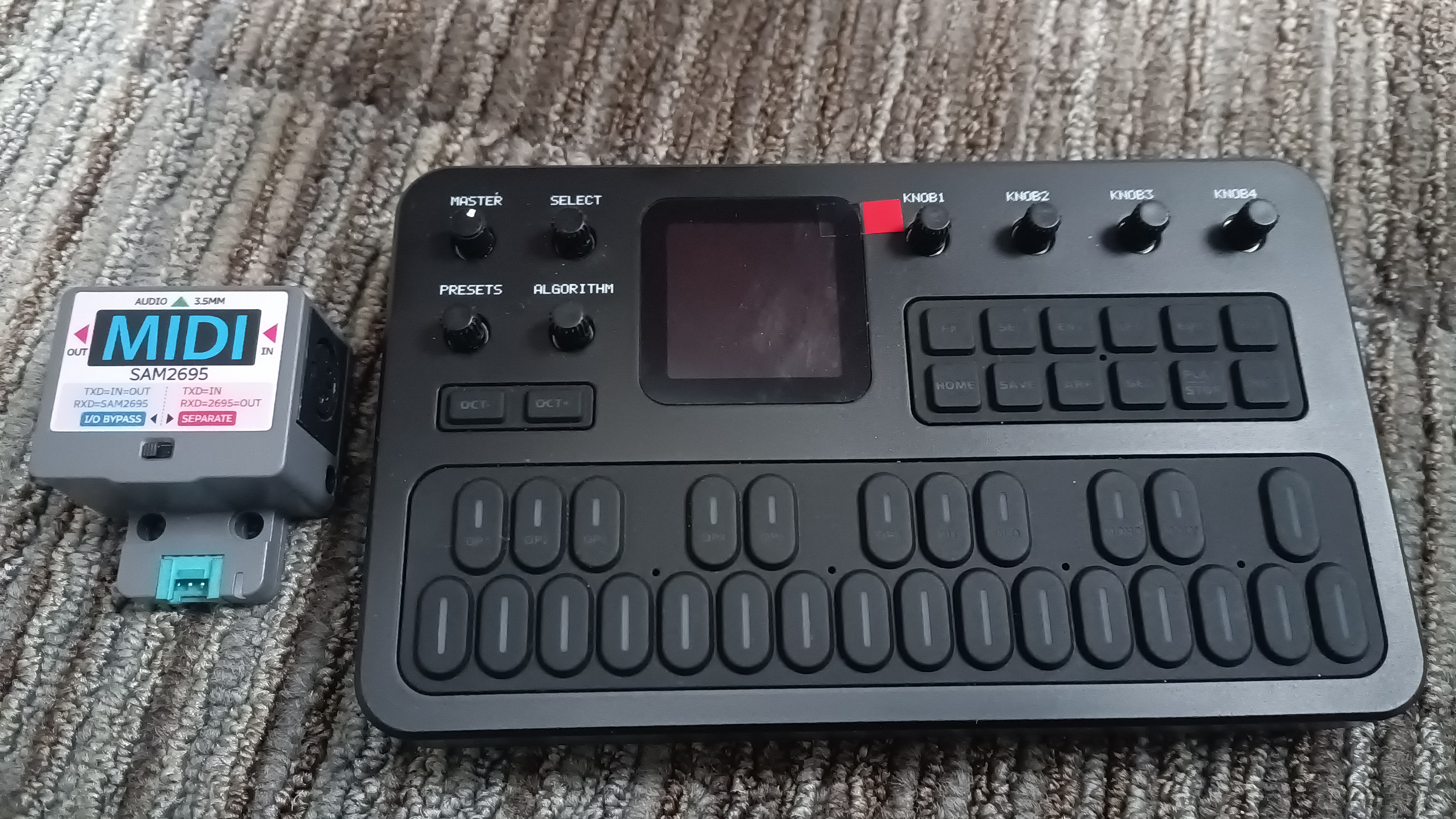
The two MIDI modules mentioned in the post, side by side

I have in mind a few projects that involve creating MIDI controllers - that is, things that send out signals to play music on... all sorts of MIDI instruments capable of playing sounds. Over the years I've picked up a few - even made the odd one - but all of them are rather bulky (not least the digital piano!), so not easy to just pick up and play with. For testing whether a MIDI controller is working, I ideally need something I can just pick up and plug in, and see if it starts making the right sort of noises. Time to go shopping...

Read more...

MIDI PMODs

electronics fpga midi nablopomo

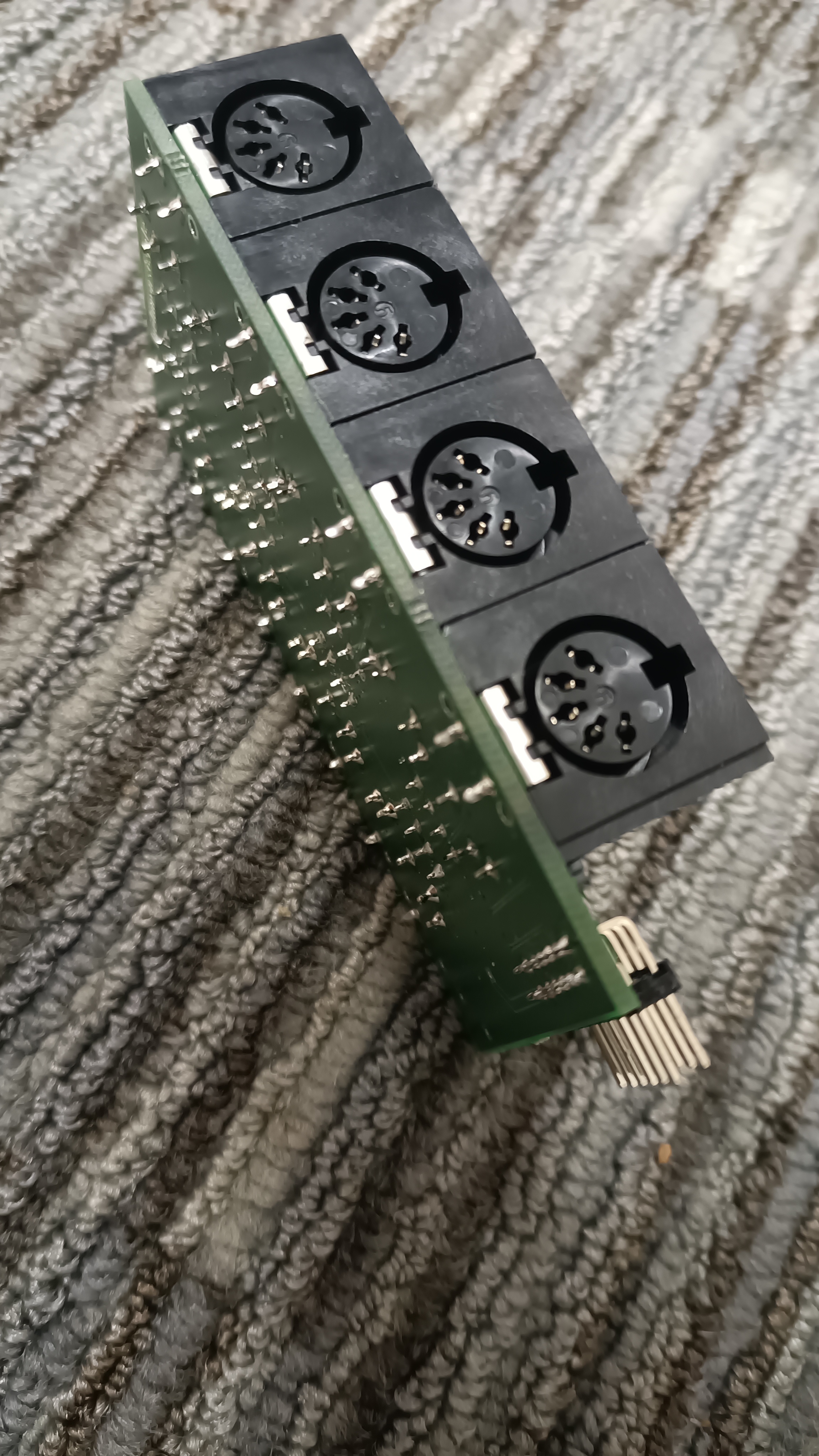
A circuit board with a PMOD plug, 4x MIDI in ports, and 4x MIDI out ports

For a while I've had in the back of my mind a few MIDI projects, that I've been putting off - in part because doing MIDI well involves very precise control of timing, and that can be tricky (or at least, not much fun) to pull off in software.

But working with FPGAs changes everything!

Read more...

An unwelcome visitor

electronics nablopomo

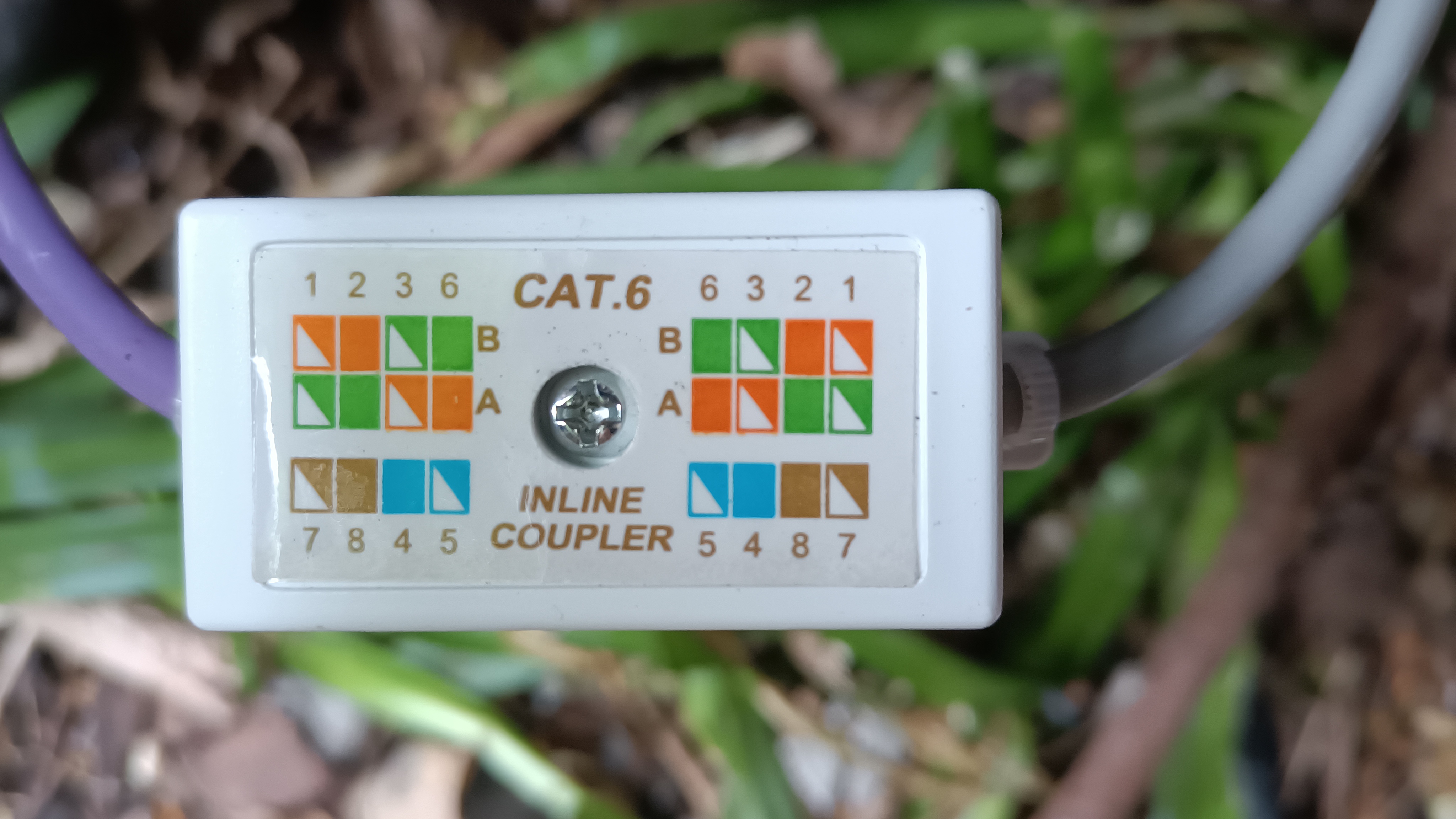
A Cat5 cable coupler, with the cover on

The other night, as I was putting the children to bed, the doorbell rang. And again - and again, and again, and again.

Wondering what emergency could necessitate this frantic bell-pushing, I rushed down the stairs and flung open the front door to see... nothing. But the doorbell continued to ring.

I pressed the bell-push myself, to see if it was stuck; at this point the ringing stopped, so I shrugged, assumed it must have just got stuck somehow, and went back upstairs to tend to the children.

Later the same evening, the bell sounded again - but this time it stopped almost immediately, and since I could see from the window there was nobody outside, I turned my attention to other things.

When I did eventually figure out the cause, it was not what I expected!

Read more...

IR Blaster: Tasmota transplant

electronics tasmota

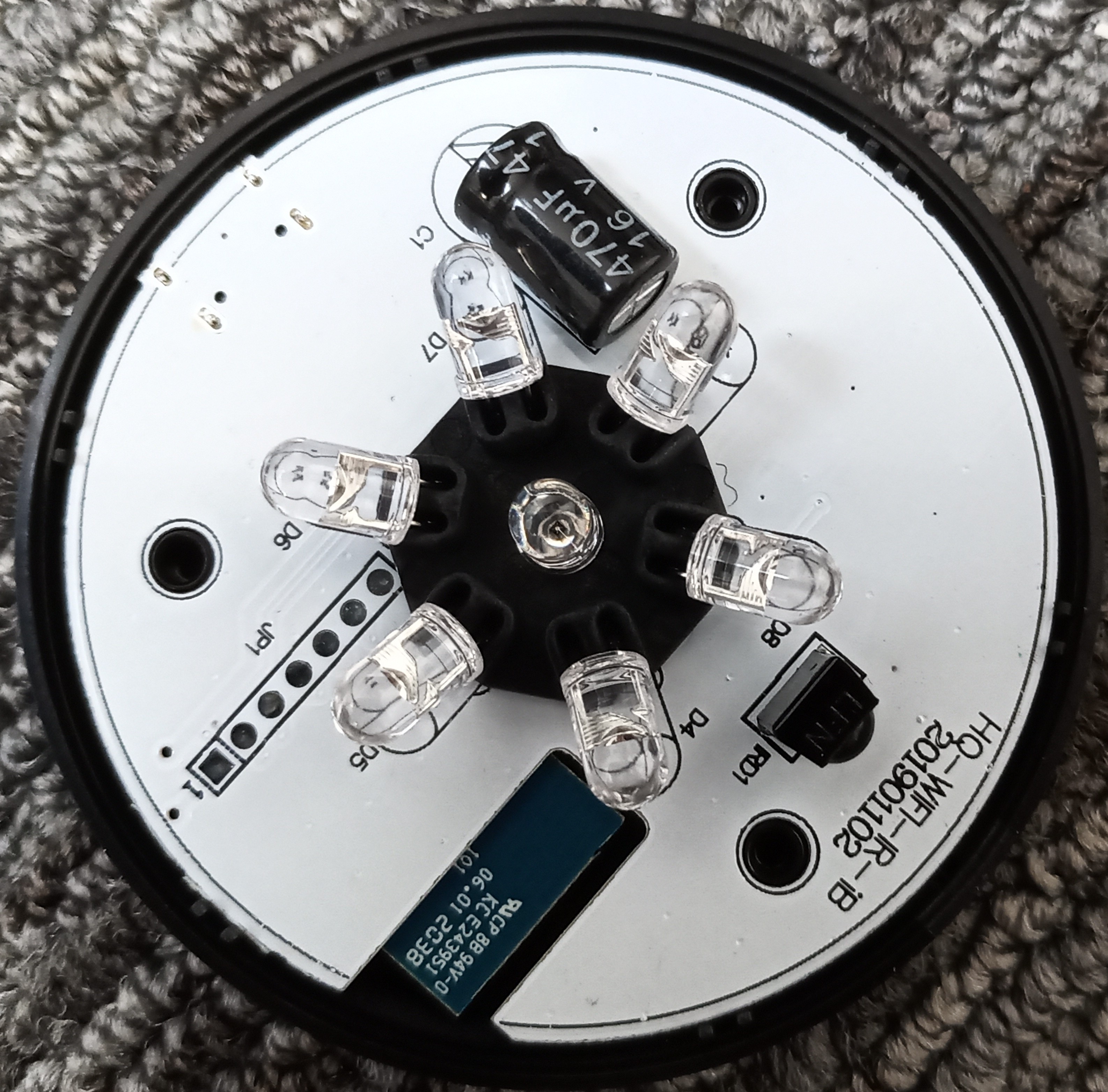
A circuit board showing six infrared LEDs arranged in a hexagon, with an extra one in the middle (plus a few other components).

To save energy, I have a bunch of cunning adapters that automatically switch on/off the device plugged into them. These run Tasmota, a very flexible and configurable open-source firmware. The devices are wifi-capable, based on ESP8266 modules, and as well as switching things on/off they also monitor the power used by whatever's plugged in to them.

This gives you a picture of where all the power is going in your house - and lets you turn it off when it's not needed! But some appliances (notably the hi-fi) need finer-grained control: we don't just want to turn it on; we need to select the right input, select a suitable volume, and so on. So it would be handy to be able to transmit infra-red remote control signals, ideally also from a device running Tasmota (which already has support for IR). How can we do that?

Read more...

Logipi Lives!

programming electronics fpga logipi raspberrypi

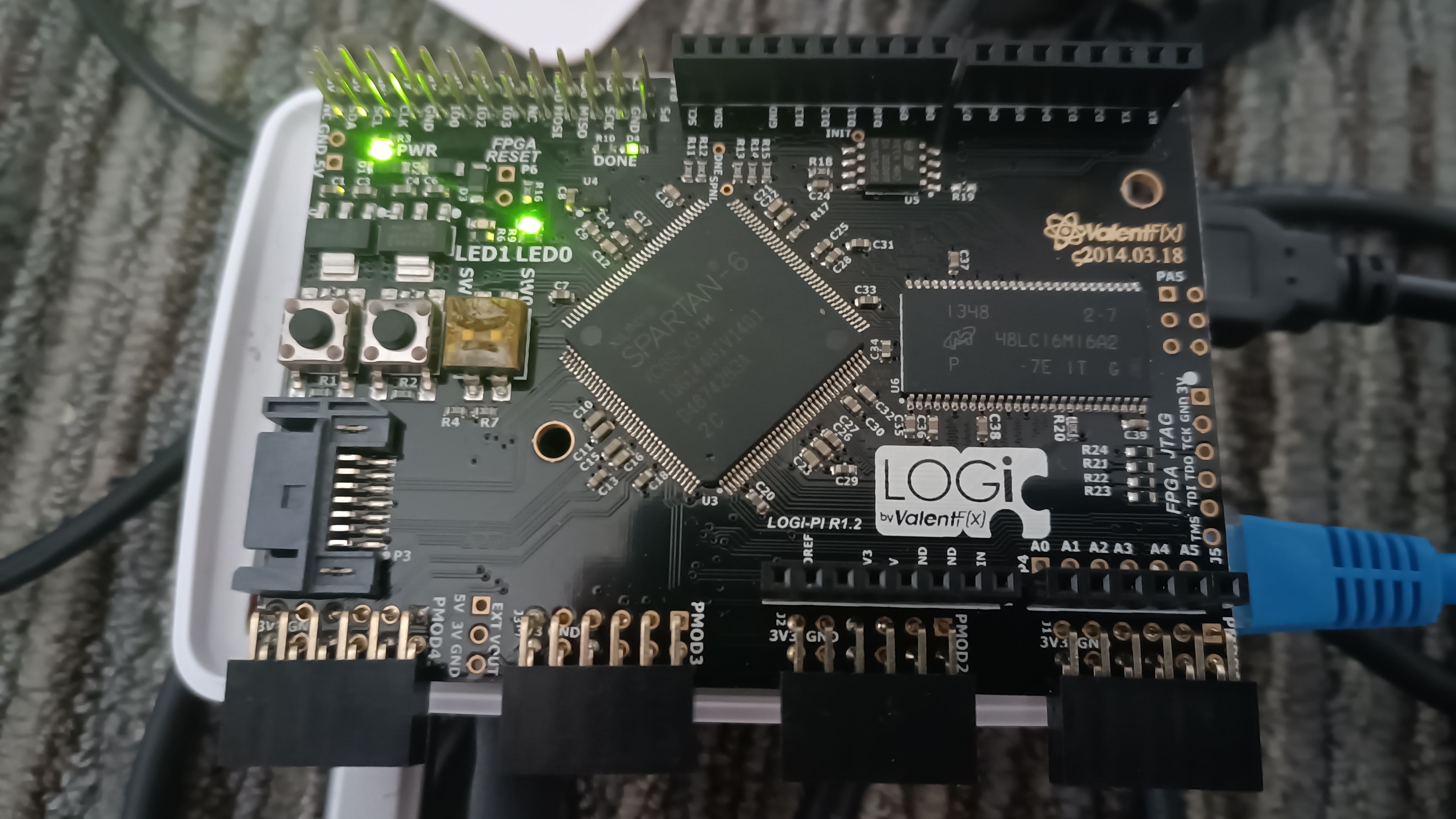
The Logi-Pi FPGA board

Good news from the resurrecting-dusty-boards-from-the cupboard department: I have managed to get the Logi-pi board to work! The process wasn't too painful:

Read more...

Resurrecting the Logi-Pi

electronics amaranth fpga logipi raspberrypi

The LogiPi FPGA circuit board

Way back in 2013, a Kickstarter crowdfunding campaign was launched, aiming to produce an FPGA board that would attach to a Raspberry Pi: the Logi-Pi. Since I was interested in learning more about programming FPGAs, and very excited about the (then very recent) launch of the Raspberry Pi, I supported the campaign, and received a board.

Sadly, for a variety of reasons, that board has sat on a shelf ever since: I didn't even manage to compile the demonstration projects for it! But with my recent interest in Amaranth, I thought it might be a good platform to try out some designs on actual hardware.

So I've dug it out, and will be trying to make it work on recent Raspberry Pi hardware and software. This will present a number of challenges:

Watch this space for progress...