M-VAVE FM-1 Synthesizer
1 week, 2 days ago midi nablopomo
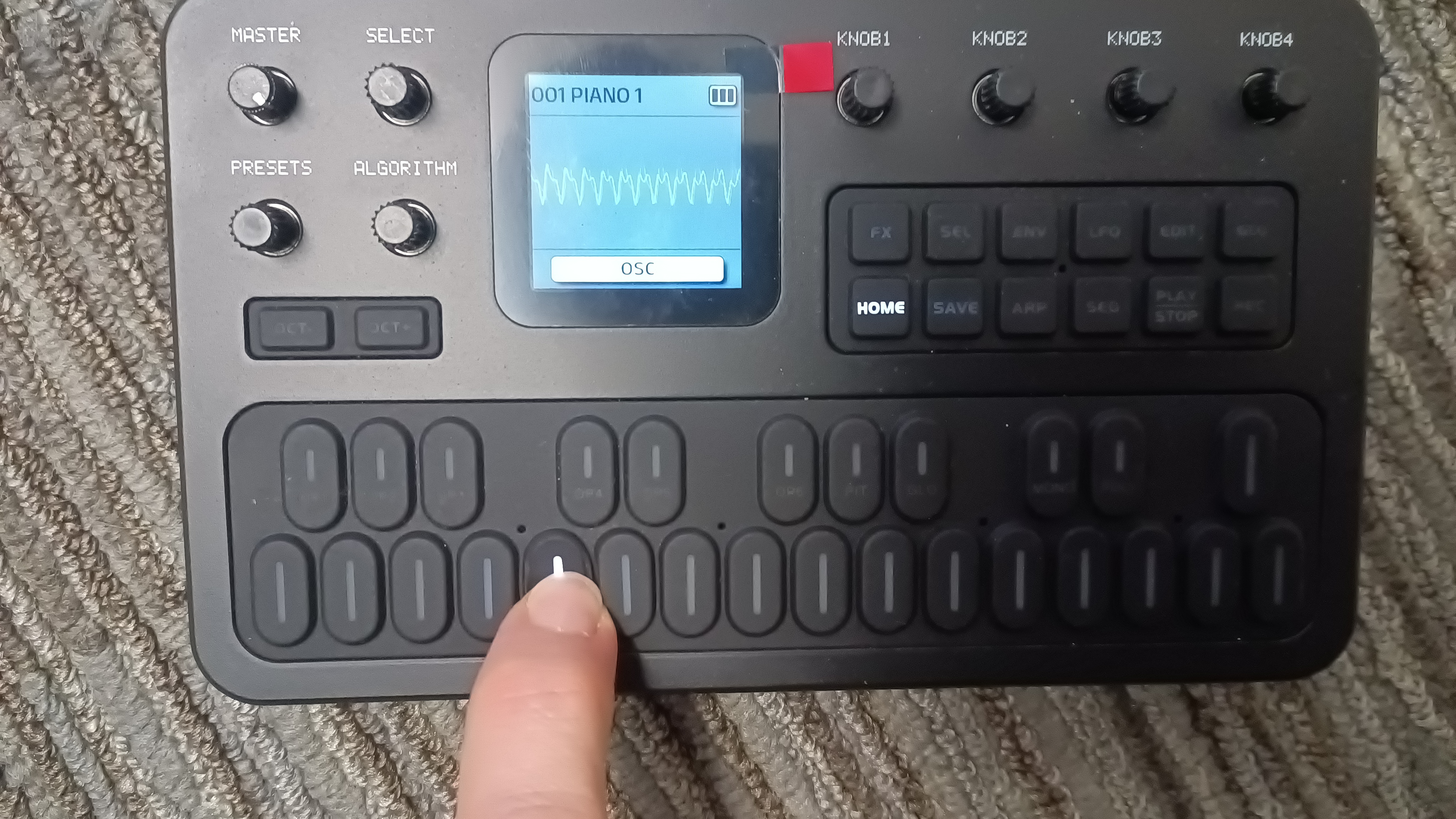
I previously wrote about some MIDI sound modules I bought recently, to help when playing around with MIDI controllers I might make - and I promised I'd describe them further. So here goes with the first...
The M-VAVE FM-1 Synth is a tiny keyboard synthesizer (roughly 15cm x 10cm), that emulates the Yamaha DX-7 synthesizer, widely used in 1980s pop music (by artists from A-ha to Tina Turner). It comes in a variety of colours -mine is black - and, in addition to the just-over-two octaves of "piano" keyboard, it has a whole bunch of knobs and buttons that allow you to choose or design your sound. There's also a colour screen that shows you either the parameters you're currently editing, or (when you're playing it) the waveform currently being played.
I put the word "piano" in inverted commas because, if you wanted an actual piano keyboard, you would be very disappointed indeed: the rubber buttons don't have shape, feel, weight or responsiveness anything approaching what would be acceptable for even an entry-level keyboard; instead they're made of rubber, and they feel - let's say "better than the keys on a ZX Spectrum - but only just". (On the other hand, they do light up when you press them... so there's that!). But that's not the point. This device isn't meant to be an instrument in its own right; it's meant to be played by sending it notes via MIDI - the keyboard is just a convenience to allow you to try out your sound settings on it without the hassle of using another device, and for that it's great.
It sounds like... well, like 80s synth pop! It comes with 127 preset sounds (and if you don't like them, you can upload more to it; it takes standard DX-7 patch files, of which lots are available online). Some of the voices are supposed (from their names) to sound like conventional instruments, while others are more fantastical. None of the conventional instrument presets make sounds that are remotely convincing - but, once again, that's not the point; this is very much a synth for synth's sake.
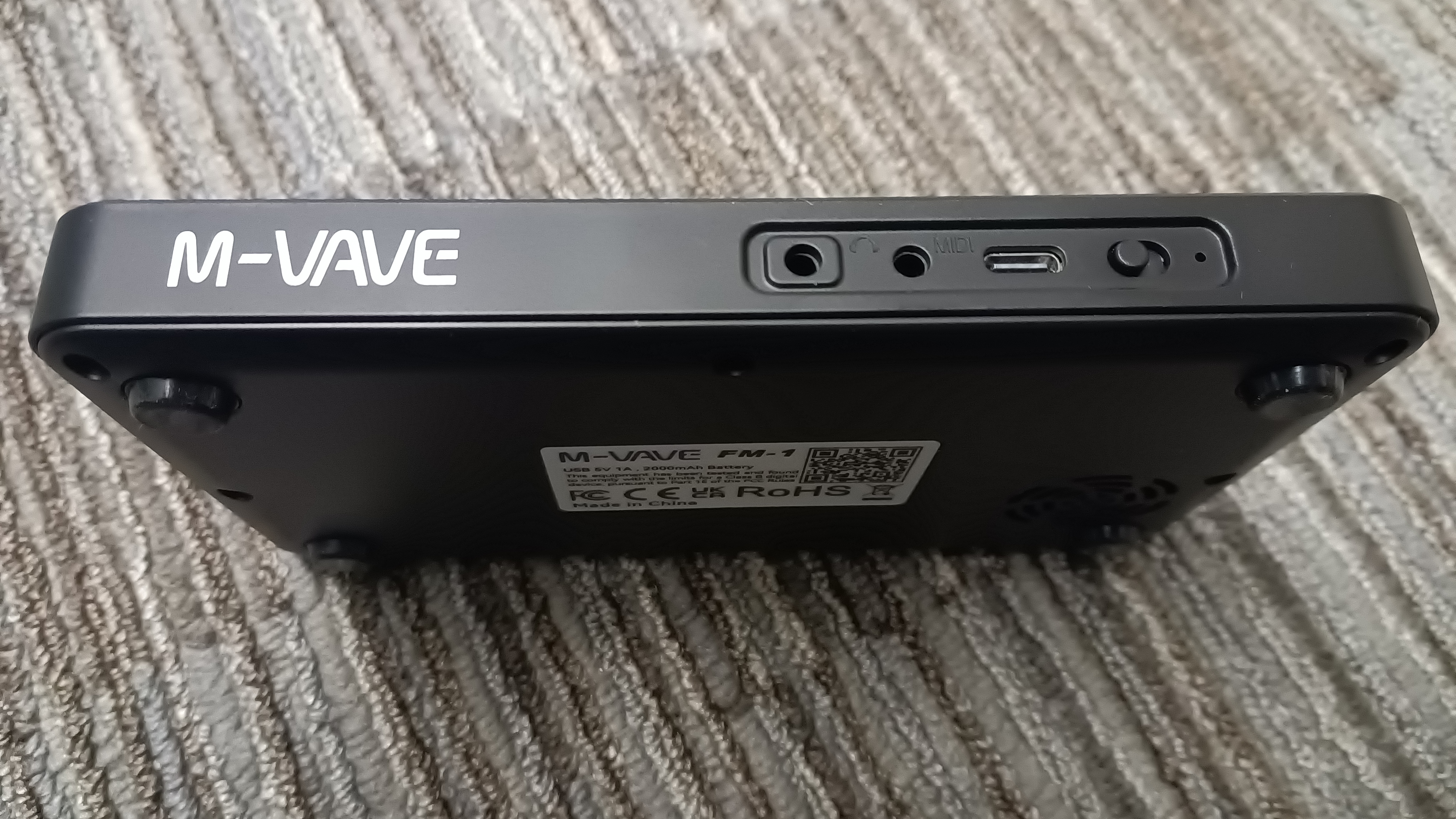
It has a built-in battery, which charges via a USB-C connector on the back - where there is also an on-off switch, a headphone socket, and a 3.5mm MIDI-in port.
How does it fare against my original criteria?
- Small and light enough to be held in a hand: ✅ Yes, it's comfortably hand-held.
- Battery-powered: ✅ It runs from a built-in battery (or USB-C).
- Complies with General MIDI: ❌ The DX-7 came out in 1983; GM first came out in 1991, so this was never going to happen.
- Has a standard MIDI connector for input: ❌ No DIN socket - but it does have a 3.5mm socket, and adapters are at least readily available.
- Built-in speaker: ✅ It makes a reasonable sound, plenty good enough for my purposes.
- Cheap: ❓It's more than I'd have ideally paid, but much cheaper than anything of comparable capability I could have had from, say, eBay, so I'm happy.
Coming next: the SAM 2695.
0 comments